The Truth About India's LPG Crisis: Separating Facts from Fear
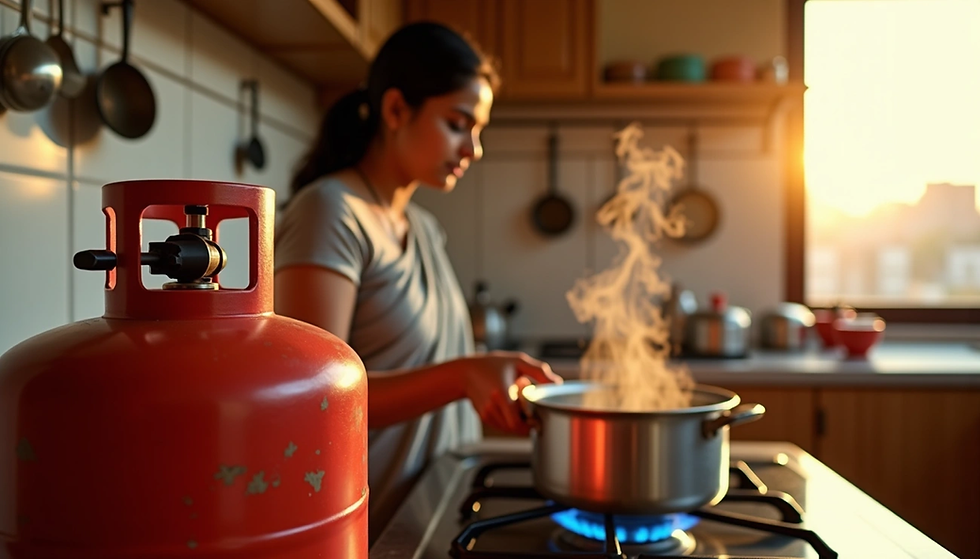
Recent developments in India's liquefied petroleum gas sector have drawn national attention, given the country's dependence on imports for nearly 62% of total LPG consumption. Geopolitical tensions affecting maritime routes through the Strait of Hormuz have created concerns about energy security, particularly since approximately 60 to 70% of India's LPG imports traditionally transit through this critical chokepoint. The government responded with emergency measures that increased domestic LPG production by 25%, as well as diversified import sources so that 70% of supplies now arrive through alternative channels. Household consumers with 332.1 million active domestic LPG connections remain protected through prioritized allocation systems. This analysis examines verified developments in India's LPG sector, distinguishing factual data from speculation, as well as documenting the government's response to ensure energy resilience.
India's LPG Supply Architecture: Production and Consumption Dynamics
Domestic production capacity and sources
India's refineries produced approximately 12.8 million metric tons of LPG during FY2024-25, accounting for roughly 40% of total consumption. This domestic output originates from three primary sources within the refining infrastructure. LPG separates naturally from crude oil during distillation processes. Fluid Catalytic Cracking Units crack heavier crude fractions into lighter products, generating LPG as a major output. Catalytic reformers contribute smaller quantities while producing petrol blending components.
The country's refining capacity stands at 258 million metric tons, with all facilities currently operating at 100% capacity or higher. Since March 8, authorities directed these refineries to maximize LPG output by diverting propane, butane, propylene, and butenes streams specifically to the LPG pool. This strategic intervention increased domestic production by 25% within days, with some reports indicating the boost reached 31% as operations continued.
National consumption patterns against available supplies
India consumed 31.3 million tons of LPG annually, translating to roughly 2,700 thousand metric tons each month. Daily consumption reaches approximately 90,000 tons. The distribution network delivers around 50 lakh domestic LPG cylinders daily to serve 33.37 crore active consumers.
Current storage infrastructure holds about 1.34 million tons, covering roughly two weeks of national consumption under normal circumstances. Tamil Nadu authorities confirmed that domestic LPG supplies remain stable for the next 20 to 25 days, while commercial segment stocks were sufficient for only two to four days. This disparity reflects deliberate prioritization strategy rather than systemic failure.
Allocation strategy protecting household consumers
The government prioritized entire domestic LPG production toward household consumers to protect 332.1 million families. The delivery authentication system maintains normal refill cycles at approximately 2.5 days, ensuring uninterrupted access for residential users. Commercial LPG allocation goes primarily to hospitals and educational institutions as essential services.
A three-member committee from IOCL, HPCL, and BPCL reviews allocations to restaurants, hotels, and other commercial establishments, ensuring fair distribution of available commercial supplies. This measured approach keeps household kitchens functioning while managing commercial demand through temporary supply adjustments.
Government Response to LPG Crisis
Essential Commodities Act Implementation
The government activated the Essential Commodities Act on March 8, 2026, issuing directives that reshaped LPG production priorities. This legal framework enabled authorities to override existing commercial contracts and establish priority-based allocation systems. The Natural Gas Control Order followed on March 9, creating a four-tier priority framework for gas distribution that places household piped natural gas, CNG for transportation, and LPG production at the highest tier with 100% supply guarantees.
Refinery Output Maximization Directive
The March 8 order directed all refineries and petrochemical complexes to divert propane, butane, propylene, and butenes streams exclusively to LPG production. Special Economic Zone facilities, which typically operate under different regulations, received similar instructions. Refineries responded by operating at full capacity, with some facilities exceeding 100% utilization. Field reports indicated the production increase reached 28% within five days, demonstrating the industrial sector's rapid response capability.
Household Priority Allocation System
A three-member Executive Director committee from IOCL, HPCL, and BPCL was established on March 9 to manage commercial allocations transparently. This committee conducted extensive consultations with state civil supply departments and restaurant associations nationwide. Hospitals and educational institutions received uninterrupted priority supply for non-domestic LPG regardless of broader demand conditions. The Delivery Authentication Code system expanded toward 90% coverage to prevent diversion at distributor levels.
Alternative Supply Source Procurement
India secured LPG from Adnoc's international portfolio and Algeria's Sonatrach, while deliveries from Australia, Canada, and the United States proceeded as scheduled. Two LNG cargoes were en route to Indian ports as of March 11.
Supply Chain Security Enhancement
Union Home Secretary Govind Mohan convened a review meeting on March 11 with all state Chief Secretaries and DGPs. States received directives to enhance security for bottling plants, distribution networks, and transport vehicles. The Ministry of Home Affairs established a 24x7 control room incorporating nodal officers from Information and Broadcasting and Petroleum ministries to enable real-time fact-checking and immediate clarifications.
Distinguishing Verified Data from Speculation
Domestic cylinder availability remains stable
Misinformation triggered unprecedented booking spikes that temporarily overwhelmed digital platforms. Household LPG bookings jumped nearly 60% on one Friday compared to the April-February average. Not a single distributor among the 25,000 LPG distributorships nationwide reported running dry. Government communications campaigns reduced panic demand, with bookings declining from 88.8 lakh to 77 lakh within 24 hours. Online bookings increased to 87%, demonstrating digital infrastructure adaptation.
Commercial cylinder allocation faces deliberate restrictions
The government allocated commercial LPG at 20% of average monthly requirements in coordination with state governments. Commercial cylinder distribution began across 29 states and Union Territories after initially prioritizing complete household allocation. Hospitals and educational institutions received uninterrupted priority supply throughout this period.
Strait of Hormuz disruption creates supply constraints
The maritime traffic halt through the Strait of Hormuz rendered approximately 55% of India's LPG consumption volumes unavailable. Since 90% of India's LPG imports transit through this chokepoint, the country faced its most significant supply constraint in recent history.
Demand management measures address panic purchasing
The government increased waiting times between cylinder bookings from 21 days to 25 days in urban areas and 45 days in rural areas specifically to manage demand. This measure prevented excessive stockpiling while maintaining regular household access patterns.
Enforcement operations target black marketing
Government enforcement teams conducted approximately 1,300 surprise inspections at distributorships and retail outlets in a single day. Uttar Pradesh authorities inspected 1,483 locations, registered 24 FIRs, arrested 6 persons, as well as initiated prosecution against 19 individuals. Raids extended across Andhra Pradesh, Karnataka, Odisha, and Bihar.
India's Strategic Approach to Long-Term LPG Security
Import source diversification initiatives
India finalized a structured agreement with United States suppliers for 2.2 million tons annually, representing approximately 10% of expected imports. This marks the country's first long-term LPG contract with American producers. The government simultaneously expanded procurement from Norway, Canada, Algeria, and Russia. Two significant shipments totaling 92,700 metric tons docked at Kandla and Mundra ports on March 16 and 17, representing the first major non-Hormuz cargo since tensions escalated.
Domestic production capacity expansion efforts
India's refineries increased output by diverting additional product streams, yet domestic production has remained relatively flat since 2017-18 at approximately 13,000 thousand metric tons annually. The government recognized this constraint as well as directed further optimization of existing facilities.
Strategic LPG reserves and storage infrastructure development
The country's current underground storage at Visakhapatnam and Mangaluru holds just 1.4 lakh tons, equivalent to less than two days of national consumption. Authorities identified three promising geological zones for expansion: the Peninsular Shield where both existing caverns operate successfully, salt formations in Rajasthan's Bikaner-Barmer belt, as well as depleted gas reservoirs in Krishna-Godavari, Cambay, and Mumbai offshore basins. Engineers India Limited partnered with Germany's DEEP for salt cavern development expertise.
Alternative cooking solutions promotion
The government urged six million families near existing pipeline infrastructure to switch to Piped Natural Gas. Currently, 15 million households connect to PNG networks. Under the Natural Gas Control Order issued March 9, domestic PNG received highest priority classification with 100% supply guarantees.
Distribution network strengthening across states
The administration directed states to launch awareness campaigns directly as well as through oil marketing companies. Seventeen states and Union Territories established control rooms for continuous monitoring. The Delivery Authentication Code system expanded toward 90% coverage to prevent diversion at distributor levels.
Conclusion
The government's response protected 33.37 crore households through strategic production increases as well as diversified import channels. Domestic LPG output increased by 25% within days while securing alternative sources beyond the Gulf region. Household consumers maintain uninterrupted supplies, with commercial allocation resuming across all states. The long-term strategy focuses on building strategic reserves, expanding domestic capacity, as well as strengthening distribution networks. This situation demonstrated India's energy resilience and commitment to safeguarding essential household needs across the country.


Comments